

NEWS
What is the difference between tof sensor and lidar?
Both tof sensor and lidar are excellent ranging modules, but their detection methods are different, resulting in differe...

Multiple cameras mean improved picture quality and optical zoom functionality. Each camera has a lens that can give you either a wide shot or a zoomed-in shot. Some phones have additional cameras that shoot black and white for increased light sensitivity while others offer depth information. Data from the different cameras can be combined into a clear photo with seemingly shallow depth-of-field and good low light capability. But why not have just one camera that can do it all?To keep their devices thin, smartphone manufacturers have opted to add more cameras to their phones. Each camera has its own type of lens with its own fixed focal length. Dedicated cameras such as DSLRs have lenses that can zoom in and out in order to capture a wider shot or get in tighter to a specific area. This can be seen by how the lens barrel protrudes or retracts as the zoom is being adjusted. This is known as optical zoom due to the fact that the glass elements of the lens barrel are physically moving back and forth in relation to each other when zooming in and out. These type of lenses are usually rather large in size but that’s hardly ever an issue in traditional photography. why would smartphone need to have more camera?What does each camera do? Wide-angle lensCamera design differs from manufacturer to manufacturer but a typical single camera smartphone has a wide-angle lens with a fixed focal length. This lens’s short focal length means a wider angle of view which is perfect for shooting things like landscapes, street photography or a large group of people without stepping too far back. Wide-angle lenses allow a lot of light in and have a deep depth-of-field which means everything in your shot remains in focus.The LG G8 ThinQ has a wide-angle lens with a focal length of 27mm which is more or less standard for this type of lens on most smartphone cameras. Ultrawide lensThis lens goes even further than a standard wide-angle lens which means you can capture even more of a scene because it has a much shorter focal length and therefore a much wider angle of view. With this lens, it possible to stand at the bottom of a tall building and fit the entire structure in your shot. Telephoto lensUnlike the wide-angle lens, the telephoto lens has a much longer focal length which means that instead of getting a shot that captures the entire scene, you can zoom into one particular area. Some smartphones use software to match the data from the other cameras to create a smooth zoom effect as the camera unit switches between the wide lens and the telephoto lens.The Huawei P30 boasts a telephoto lens with a focal length of 125mm. This means you can zoom in up to 5x without losing picture quality! Monochrome sensorA monochrome (black and white) sensor has no colour filter array which means it can capture sharper images than a colour sensor. It also means that the monochrome sensor is more sensitive to light which is good for low light situations. Pictures taken in true black and white (not processed through a filter) are known to be sharp and full of contrast.Smartphones that have this camera, use the sharpness and contrast information from it and blend it with the image from the colour sensor to create a final colour image with better lighting and sharpness.And if you’re a fan of black and white photography, it is possible on some smartphones to isolate the monochrome camera and take photos in true black and white. Time-of-Flight camera (Depth sensor)A Time-of-Flight (ToF) camera is basically a depth sensor. It shoots out an infrared light and measures how long it takes for the light to reach the subject and bounce back to the sensor. This data is used to create a depth map of the subject and the surroundings.It is the information from the depth sensor that is used by software to separate the foreground and background and thus create the blurry background bokeh effect.Not all smartphones have a dedicated ToF camera. Some manufacturers have opted to rather use information from the other cameras in order to figure out the depth in the scene through complex algorithms.
Read Featured StorySpeak with our engineering team to find the perfect sensor for your application.
Contact Engineers
Both tof sensor and lidar are excellent ranging modules, but their detection methods are different, resulting in differe...
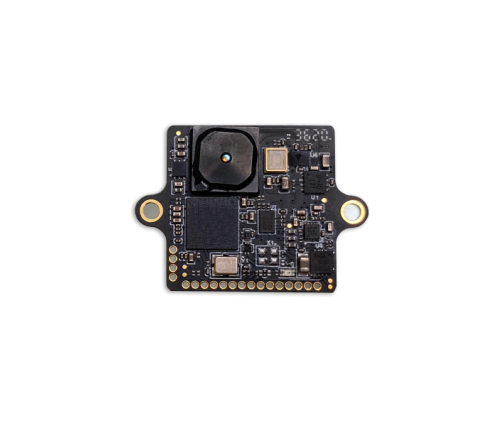
In recent years, Tof camera has been widely used in various fields, A ToF camera goes by many names. It is also referred...

d-ToF is direct ToF. Compared with i-ToF technology which uses the phase of the measurement signal to indirectly obtain ...

DOMI has a variety of ToF sensor that can be well applied to the field of gesture recognition, such as DMOM2501A, RGBD c...

This 3D ToF camera DMOM2501A device would be perfect to us for various applications from DOMI, Face recognition and face...
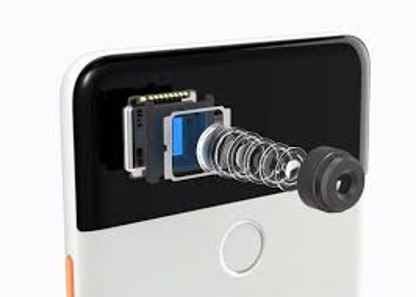
ToF camera can accurately measure the distance and contour of the target, and realize the collection and calculation of ...

ToF camera is small in size, which is very suitable for some application scenarios that require lightness and small size...
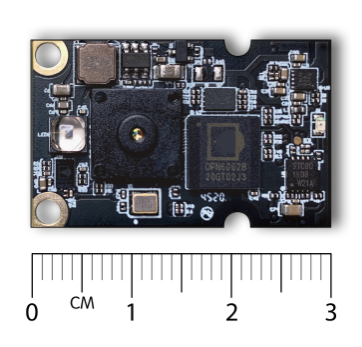
At present, for IoT applications such as smart home appliances, smart lighting, smart homes, smart parking, etc. DOMI ha...

The hardware of the ToF sensor can be divided into a transmitting end and a receiving end. The transmitting end is compo...